The Era of Efficiency
Five eCommerce trends shaping 2026
By 2026, eCommerce is firmly established as a core pillar of retail and wholesale performance, both in the UK and globally.
Globally, online retail sales are forecast to reach around $6 to $7 trillion annually, accounting for more than one fifth of total retail sales worldwide, according to leading industry analysts including Statista and research cited by Forbes. ECommerce growth is no longer driven by rapid expansion alone, but by maturity, scale, and operational effectiveness.
In the UK, eCommerce remains one of the most developed digital markets in the world. Data from the Office for National Statistics shows that around a quarter to nearly a third of all UK retail sales now take place online, with eCommerce deeply embedded in everyday purchasing across consumer and trade sectors. Mintel and similar UK focused research consistently highlights that while overall retail growth has moderated, online adoption remains structurally high and customer expectations continue to rise.
Against this backdrop, eCommerce has entered a more disciplined phase.
The industry has moved away from growth at any cost and toward doing the fundamentals exceptionally well. Retailers and wholesalers are asking tougher, more commercial questions. How do we remove friction. How do we protect margin. How do we make life easier for customers and internal teams at the same time.
At Williams Commerce, we see this shift every day. The most successful businesses are not chasing every new tool or channel. They are simplifying their operations, improving data quality, and using technology to work smarter rather than harder.
These are the five trends we believe are helping to define eCommerce in 2026 and what they look like in the real world.
1. From chatbots to AI that actually does the work
A few years ago, AI in eCommerce meant chatbots and basic recommendations. In 2026, AI is increasingly taking action.
In consumer retail, AI assistants now handle repeat purchases. Printer ink, cleaning products, replacement filters. Customers set the rules once and the system takes care of the rest.
In B2B, the impact is even more significant. Procurement teams are using AI to scan thousands of SKUs, check technical specifications, validate availability, compare contract pricing, and shortlist suitable products in seconds. What once took hours now happens before the working day really starts.
What this means in practice
AI is only as good as the data behind it. If your product information is inconsistent, incomplete, or outdated, AI simply skips you.
Structured, accurate product data is no longer just for your website. It is how machines understand your products. In 2026, a well implemented PIM is as important as your homepage.

2. Unified commerce finally becomes non negotiable
Customers have run out of patience with disconnected systems.
By 2026, they expect pricing, stock availability, and order history to match everywhere. Online. In store. On the phone. Without explanation.
Unified commerce is not about adding more sales channels. It is about running everything from a single source of truth. When it works properly, customers never see the complexity behind the scenes.
A simple example
A trade customer checks stock online, places an order, and collects it from the counter an hour later. The price reflects their contract. Stock updates immediately. The invoice is already waiting in their account.
That experience only works when your ERP and eCommerce platform are properly connected.
As Tanya Peasgood, Head of Consultancy at Williams Commerce puts it:
“Unified commerce is not about front end polish or adding more channels. It is about trust and consistency. Customers expect prices, stock levels, and order information to be right wherever they interact with you. If that data is wrong in one place, it undermines confidence everywhere. The businesses that get this right are the ones investing in strong foundations. Clean data, integrated systems, and a single source of truth across their operations. That is what turns everyday transactions into long term customer relationships.”

3. Social content and livestream commerce become the front door to eCommerce
Search is no longer the default starting point for many buying journeys.
By 2026, discovery increasingly happens on platforms where content and commerce sit side by side, such as TikTok Shop and YouTube Shopping. Customers are encountering products through short form video, creator recommendations, and live demonstrations long before they ever visit a traditional eCommerce site.
A single piece of content showing a product in use can trigger demand faster than any keyword campaign. For many brands, social platforms now act as an early warning system. When interest spikes, teams need to respond immediately with the right stock, pricing, and fulfilment options.
Livestream eCommerce is a natural extension of this shift.
Live video allows brands to demonstrate products in real time, answer questions instantly, and convert interest into orders within a single session. What was once associated with niche markets has become a proven sales format when supported by the right operational foundations.
Globally, livestream eCommerce is already a significant revenue channel, particularly in markets such as China, and adoption is accelerating across the US and Europe. In the UK, it is gaining traction in categories where explanation, reassurance, and trust matter, including beauty, fashion, home, and specialist B2B products.
Why this matters in 2026
Social and livestream commerce compress the funnel. Discovery, consideration, and purchase happen in one place. There is less reliance on retargeting, fewer abandoned baskets, and faster decision making.
However, success is not driven by content alone.
The brands seeing results are those that treat social and livestream activity as part of their core commerce operation, not a marketing experiment. Real time stock visibility, accurate pricing, and frictionless checkout are essential. When interest turns into demand, systems need to keep up.
In 2026, social content is not just influencing eCommerce. It is increasingly where eCommerce begins.
4. Circular commerce becomes part of the core business
Sustainability has matured.
By 2026, customers expect brands to take responsibility for the full lifecycle of a product. That includes resale, refurbishment, and recycling, not just greener packaging.
In the UK, more retailers are introducing digital product records that show origin, repair options, and end of life handling. In B2B, this is increasingly driven by regulation as well as customer pressure.
What this looks like online
Clear recycling options at checkout. Trade in incentives for old equipment. Pre-owned sections that sit alongside new products.
Done well, circular commerce protects margin, supports compliance, and builds long term loyalty.
Tanya says;
“Circular commerce has moved well beyond a sustainability talking point. Customers now expect brands to take responsibility for the full lifecycle of their products, and they expect that information to be clear and accessible online. The businesses doing this well are not just meeting regulatory requirements. They are finding practical ways to protect margin, extend product value, and strengthen customer relationships by making reuse, repair, and resale part of the buying experience.”
5. Logistics gets faster, smarter, and more flexible
Delivery expectations have continued to evolve, but not because customers are demanding the impossible. It is because their everyday behaviour has changed.
By 2026, customers are not asking whether delivery is fast. They are asking whether it fits into their lives. Can I get it today. Can I collect it on the way home. Can I trust the delivery window. Can I choose a lower impact option if speed is not essential.
To meet those expectations, smart eCommerce retailers are rethinking both fulfilment and carrier strategy.
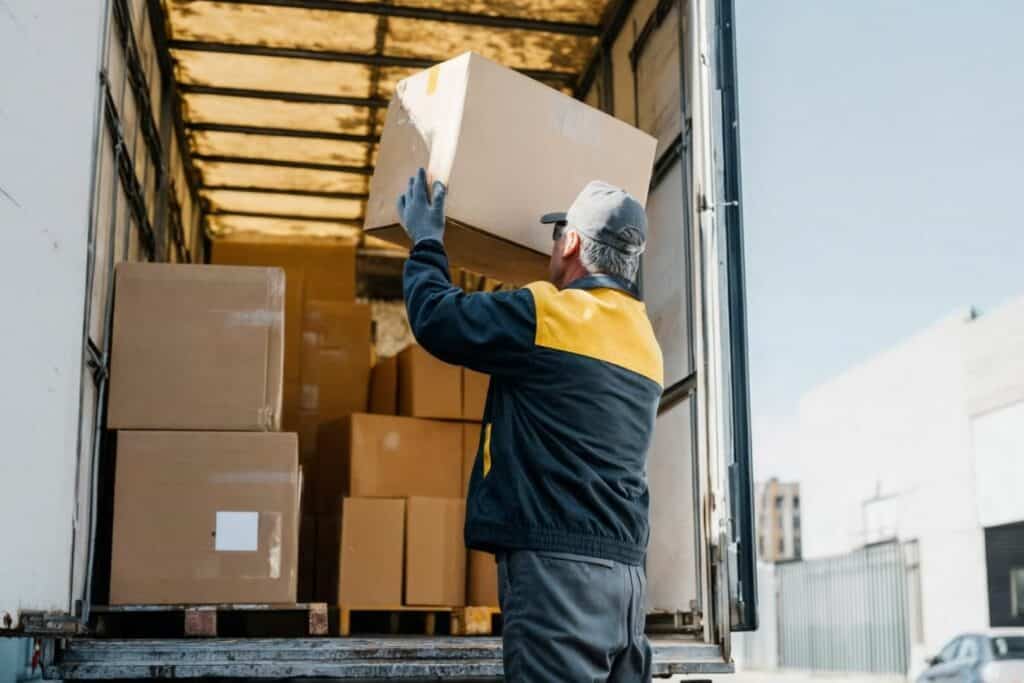
Stores, depots, and trade counters are increasingly being used as local fulfilment hubs, bringing stock closer to customers and reducing last mile pressure. At the same time, retailers are no longer relying on a single delivery partner. Instead, they are building flexible carrier mixes that might include Royal Mail for reach, Evri for value, DPD for time critical delivery, and DHL for international or premium services.
This shift is not about chasing the cheapest option. It is about resilience and choice. When volumes spike, weather disrupts networks, or customer expectations vary by region, retailers want the flexibility to route orders intelligently rather than being locked into a single provider.
Logistics is also becoming more predictive. Instead of reacting to demand, businesses are using data and AI to anticipate it. Stock is positioned regionally based on ordering patterns, seasonality, and local demand, often before customers even realise they need to place an order.
The moment where all of this either works or fails is the checkout.
Buy online and collect. Locker pickup. Nominated delivery slots. Lower carbon delivery options. Customers expect these choices to be clear, reliable, and accurate.
The eCommerce brands converting best in 2026 are not the ones promising every possible option. They are the ones offering the right mix of delivery choices, supported by systems that keep fulfilment fast, flexible, and controlled without adding operational complexity behind the scenes.
Final thoughts: efficiency is the competitive advantage
By 2026, most eCommerce businesses have access to similar tools. The difference is no longer who has the newest platform or the most features. It shows up in day-to-day moments.
It shows up when a customer places an order and it goes through cleanly the first time. When stock levels are accurate. When a delivery promise is met without a follow up email. When teams are not firefighting small issues that should never have happened in the first place.
Across the trends shaping eCommerce today, the same truth keeps appearing. Businesses that understand their data and keep it connected make better decisions and move faster. They spend less time fixing problems and more time improving the experience for customers and colleagues alike.
This is also where AI either helps or gets in the way. When data is reliable, AI supports better forecasting, smoother operations, and more relevant customer interactions. When it is not, it simply exposes the cracks.
The businesses that are pulling ahead in 2026 are not doing anything flashy. They are simplifying how their operations work, connecting the systems that matter, and treating technology as something that quietly enables growth rather than something that constantly needs attention.
That is what the era of efficiency in eCommerce really looks like.
Tanya Peasgood adds:
“These are just five of the trends we are seeing shape eCommerce right now, and the landscape will continue to evolve. AI is understandably top of mind for many businesses, but it is not happening in isolation. The organisations making the most progress are looking at how everything fits together. Data, operations, customer experience, and technology choices. When those foundations are right, new capabilities like AI become far more valuable and far easier to adopt.”
Bringing it all together
With over 15 years of experience, Williams Commerce has worked with retailers and B2B organisations of all sizes, across the full spectrum of eCommerce maturity. From early-stage platforms to complex, enterprise scale operations.
We understand that eCommerce success comes from bringing many moving parts together. Data, systems, customer experience, operations, and teams all working in alignment.
That is where we help most, working alongside teams to turn strategy into practical, day to day progress. By cutting through complexity, connecting the right foundations, and supporting businesses as they turn strategy into something that works day to day.
If you are looking to make sense of where eCommerce is heading next and how your business should respond, get in touch with our experienced eCommerce team today.
Email us at [email protected] or call us 9am to 5pm Monday to Friday on 0116 326 1116.